
About Us · How Does It Work?
How the Ethics Olympiad works
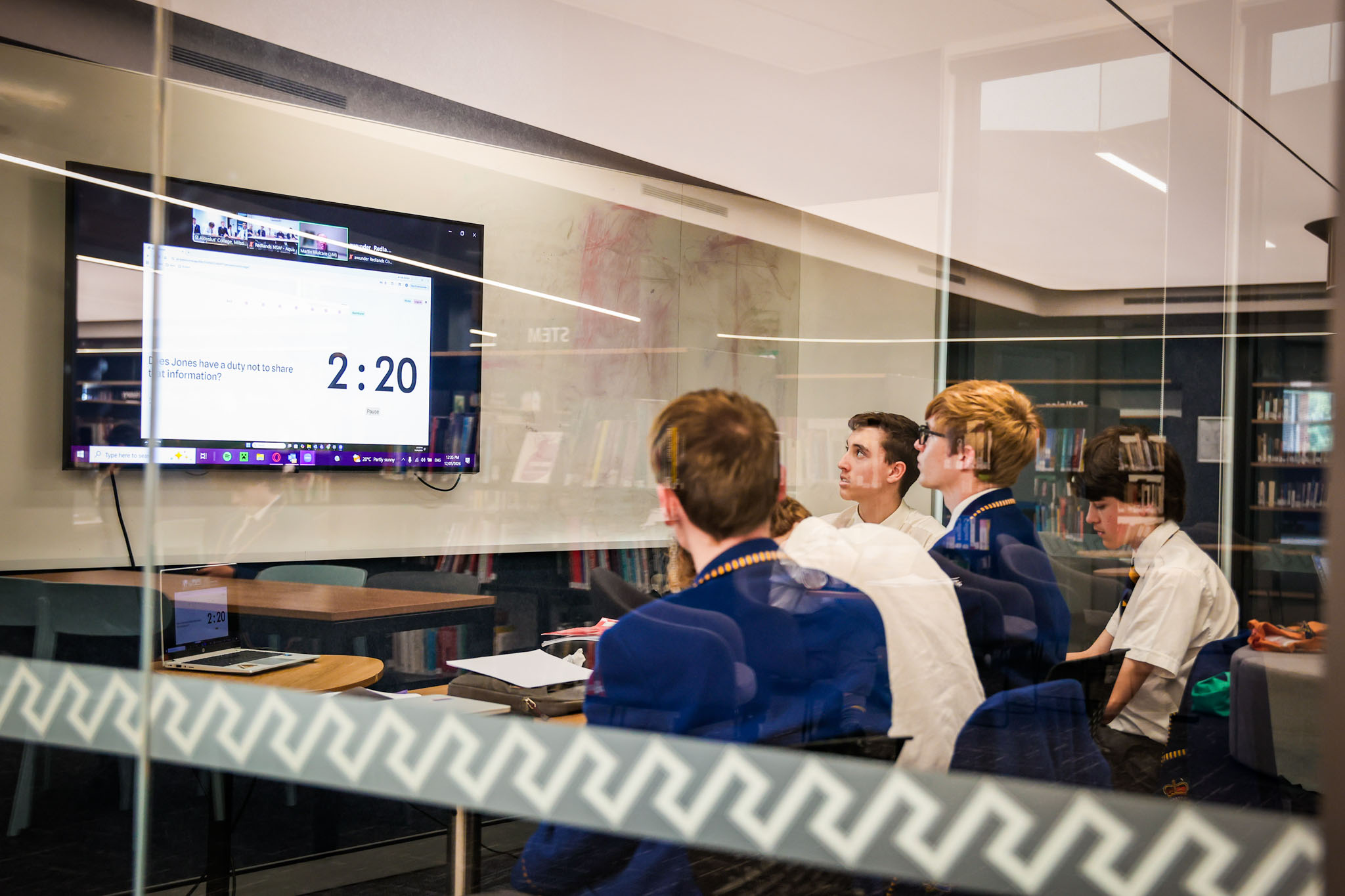
Students, or ‘Eth-letes’, are guided by a coach who helps them prepare. Cases are released in advance, and on event day teams meet online via Zoom.
How the event works
The shape of the day
In every heat, two school teams are sent into a Zoom breakout room with an experienced judge to discuss two of the cases. Each new heat pairs you with a different school.
The aim
The aim is to develop critical thinking, collaboration, and clear communication skills within a shared conversation. Students are provided a constructive space where they can work through complex ethical issues together.
More information
Team structure
Teams of 5 students, guided by a coach. Schools and universities may enter one or two teams per division.
Coaches receive
A comprehensive set of coaches resources, plus the full case set well before the event.
Fees
Team registration is currently $260–$270 AUD. Discounted rates apply for member schools and early registrations.
INTERNATIONAL FINAL - MIDDLE SCHOOL & SENIOR SCHOOL
The top teams from the Middle & Senior School Events will receive an invite to the international final, where they compete with teams from across the world.

How a heat works
What judges look for
Judges assess teams on the clarity, their critical thinking skills, and their ability to respond respectfully, constructively and collaboratively. The judging key is available to view in the coaches resource kit.
The structure
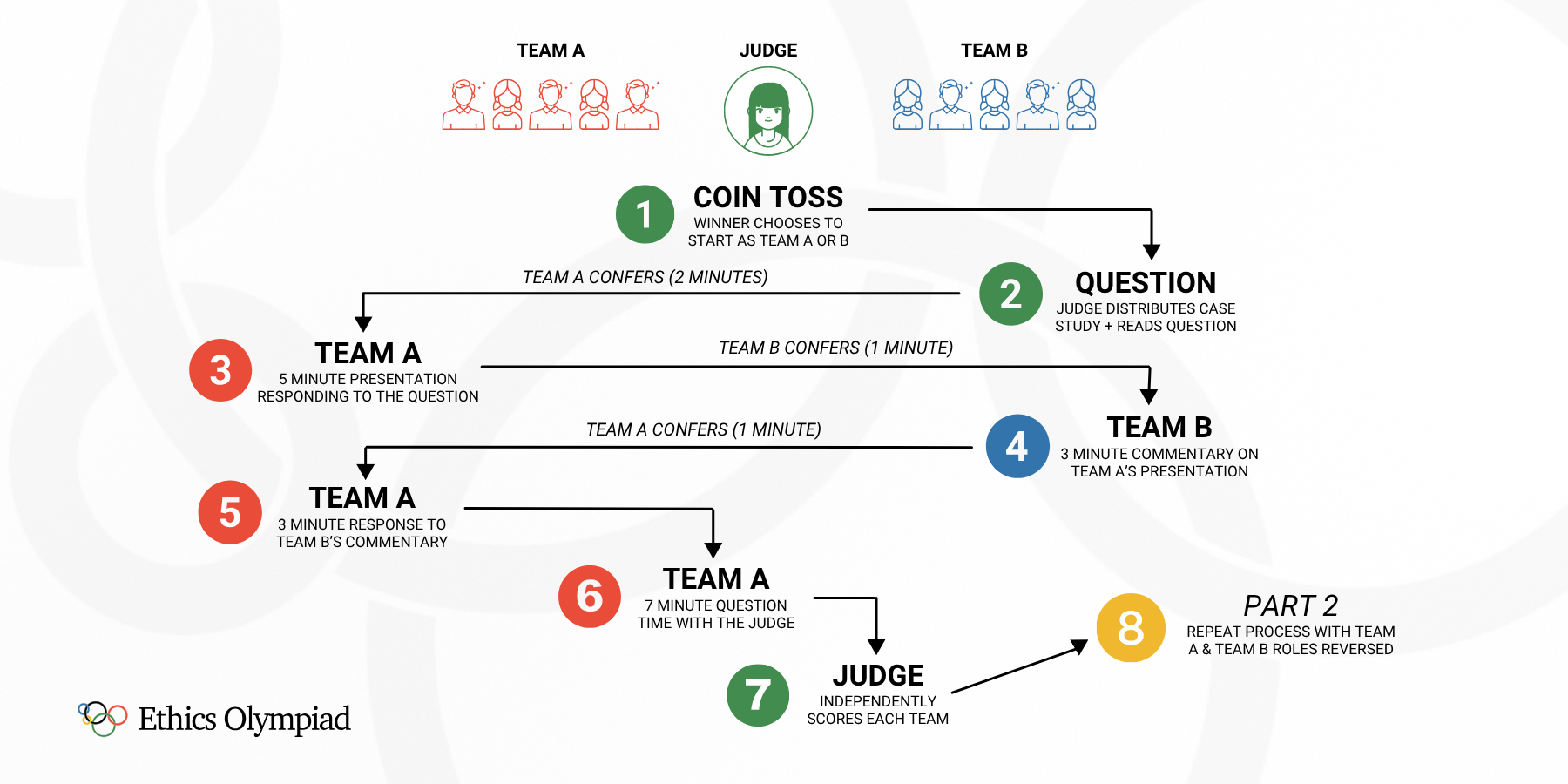
Each round centres on an ethical question. Two teams meet in a moderated session with an experienced judge. The structure looks like this:
- A coin toss decides which team begins.
- The judge presents the case & ethical question.
- The first team delivers a 5-minute presentation explaining the position they find most defensible.
- The other team offers a 3-minute commentary, analysing and engaging with that reasoning.
- The first team has 3 minutes to respond.
- The judge spends 7 minutes questioning the presenting team to probe and clarify their thinking.
- The roles are then reversed, so both teams present and respond.